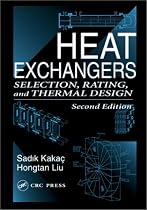
Good reference...
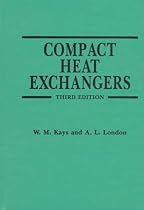
Any packaging engineers particularly those in the telecommunications field who are looking at system-level thermal issues may find this book fairly useful. There is a huge amount of information here that is hard to get from any other sources other than scouring a lot of journals.
This is not an easy read and you should be well-versed in the elements of heat transfer particularly duct flow. However there is a wealth of experimental data that is still being "mined" by many researchers. Except for some of the newer papers by Manglik and Bergles (see their work on offset strip fin heat exchangers) you aren't missing much information relevant to heat exchangers or heat sinks.
I would suggest another reference such as "The Handbook of Heat Transfer" and "Fundamentals of Heat and Mass Transfer" to supplement the information in this volume. Certainly I have used all three designing new heatsinks for specific applications.More detail ...
Excellent! Highly Recommended for Those w/ Strong Interests in HX Design and Rating
This is one of the best current single-volume sources of information for those interested in design theory and performance rating methodology for heat exchangers. This is an advanced text that would be most appropriate for graduate students and practicing engineers in the thermal sciences. An introductory course or text on basic heat transfer may be required for those w/ little background in the area to appreciate the intensity and wealth of information contained in this text.
There is detailed coverage of some subjects only mentioned in other heat exchanger design books i.e. the temperature effectiveness (P-NTU) method longitudinal conduction effects non-uniform heat transfer coefficients flow maldistribution header/manifold design to name a few.
Comprehensive correlations are well-documented and explained much of them in generalized and dimensionless forms so they are applicable to a large range of fluids and materials. Quite a bit of tabular data graphical and reference information is supplied as well. Some examples are typically worked in each chapter illustrating the analysis technique. The text is well-written and there are few notable errors.
I have only one quibble: there is very little useful thermo-physical property data in the appendices of the textbook. You'll need to find this info. elsewhere. Also I agree w/ the previous reviewer. Details of heat exchanger mechanical design fabrication and construction are not well-covered in this book. You might refer to Kuppan's book (or another source) for more recommendations on construction and materials selections
Bottomline: An excellent advanced textbook on the thermo-hydraulic design and performance rating of heat exchangers.
More detail ...
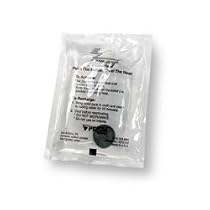
Very Warm!We popped theses babies open and tested them out. They will keep your hands warm alright! Don't put them in your bare hands!
More detail ...
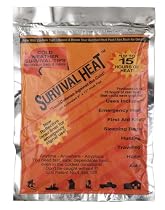
Large chemical heat packs rock!We bought these chemical heat pads to survive camping in the desert. They are great for getting the sleeping bag ready at night. Just open one up and put it in the sleeping bag about 20 minutes before you go to bed and then move it around once you get in. It makes the first few minutes bearable before your body heat takes over.
More detail ...
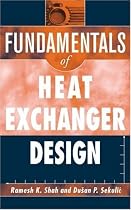
An excellent guide for using heat exchangersAlmost all kinds of heat exchangers have introduced by this title! It contains detail and abundant materials about heat exchangers like charts equations and tables. It also contains the detail process for design of heat exchangers. Besides the examples mentioned by the title are so clear and easy to understand. Well the title can easily make junior engineers to handle the work of using and design heat exchangers.
More detail ...
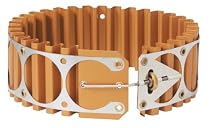
MSR Heat ExchangerHelped me heat up my ramen noodle in the wind and cold really sped up the boil time. Excellent price really good product.
More detail ...